Grid-tied solar
Generate power for a home or business while remaining connected to the utility. Explore roof- and ground-mounted arrays, interconnection requirements and realistic energy-offset goals.
Explore grid-tied solar →
From a grid-connected home in Buffalo to a remote cabin in the Big Horn Mountains, Chesbro Electric designs and installs practical solar power systems built around the property's loads, terrain, weather and long-term goals.
Residential · Ranch & agricultural · Commercial · Remote properties
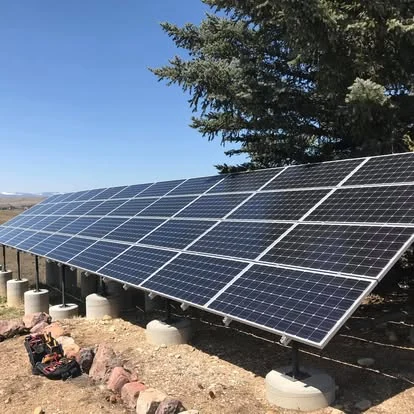
There isn't a single solar package that works for every Wyoming property. We help determine which configuration makes sense before choosing modules, inverters, batteries or controls.
Generate power for a home or business while remaining connected to the utility. Explore roof- and ground-mounted arrays, interconnection requirements and realistic energy-offset goals.
Explore grid-tied solar →Power cabins and remote sites that have no dependable utility connection. Design around winter sun, battery autonomy, well pumps, access and backup needs.
Explore off-grid systems →Combine solar generation with batteries and, where appropriately designed, a grid connection or generator. Create an energy system with defined backup priorities.
Explore hybrid systems →Consider module-level power conversion where roof angles, shading or module-level monitoring make that architecture a good fit.
Compare inverter approaches →Solar pumping for wells, cisterns, remote water storage and qualifying stock-water applications where utility service is distant or unavailable.
Explore solar water pumping →Remote area lighting for gates, ranch roads, equipment yards, signs, trails and other sites that may not justify extending utility power.
Explore solar lighting →Grid-connected solar can produce part of a property's electricity while the utility remains available. We look at measured or documented usage, roof or ground conditions, shading, electrical service capacity, utility policies and the project budget before specifying equipment.
Important: Standard grid-tied solar generally shuts down during a utility outage unless a properly designed and approved backup/islanding system is provided. Bill savings depend on actual energy use, rates, tariff terms, project costs and production; they're not guaranteed.
Discuss grid-tied solar →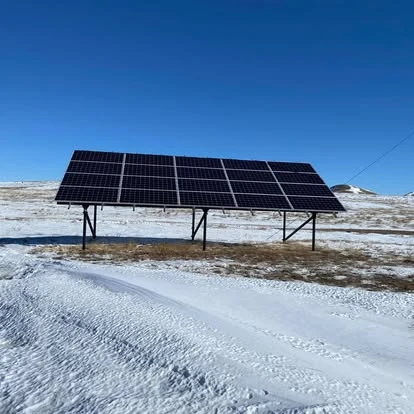
Mountain cabins, hunting properties, remote workshops and rural sites can need reliable electricity far from a utility line. That takes more than a panel count: the system must support actual daily energy use, motor starts and the length of time you expect to operate without useful sun.
We design around the actual site and usage; an off-grid system cannot be assumed to run indefinitely through consecutive dark winter days without enough storage, load management or an additional generation source.
Plan an off-grid solar project →Big Horn cabin electrical services →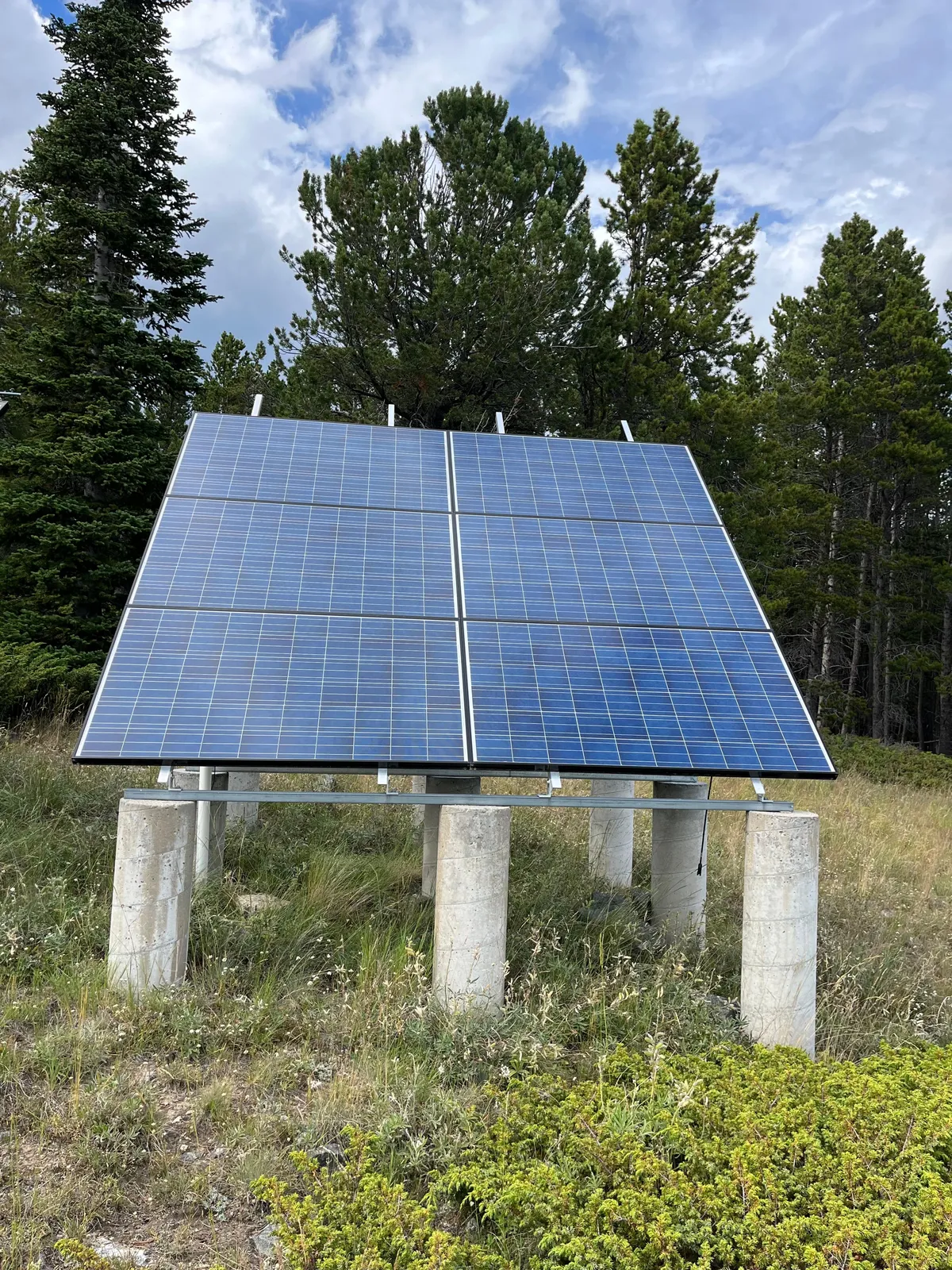
We compare options based on the building, shade conditions, wiring, backup requirements, equipment listing and long-term serviceability—not just a brand name.
A centralized conversion approach that can work well for many roof and ground arrays. Design details determine how shade, module layout and service access are handled.
Consider when:The array geometry and system design favor centralized conversion.Module-level conversion at the panels, useful on some multi-plane or partially shaded roofs and for supported panel-level monitoring.
Consider when:Roof layout, module-level behavior or monitoring needs justify the approach.Integrate appropriately matched solar and battery equipment and, in some systems, grid and generator inputs. Backup capability depends on exact inverter, transfer/islanding equipment and battery design.
Consider when:You want a properly engineered solar-plus-storage or backup system.We confirm manufacturer compatibility, equipment ratings, appropriate rapid-shutdown and interconnection requirements, approved backup topology and manufacturer instructions for the selected system.
Solar-powered well and water-pumping equipment can be practical for certain ranch, pasture and remote applications. We can evaluate a dedicated solar pump system or a pump supported by a larger off-grid electrical system.
To size the electrical system properly, we review daily water demand, pumping head and well depth, existing pump data, delivery distance, storage capacity, shading, seasonal operation and freeze protection. A direct-solar system without batteries may use water storage to carry demand through low-sun periods; electrical storage or another power source may also be appropriate.
Water availability, well production, water rights and applicable plumbing requirements must be evaluated separately. No pump output or continuous winter operation is promised without a site-specific design.
Request a solar well-pump consultation →Every well is different. A real proposal should use your pump curve, available sun, storage targets and site conditions—not a generic kit-size promise.
Not every gate, road, pole, outbuilding or remote work area needs a new utility feeder. For the right application, dedicated photovoltaic lighting with an LED fixture, charge controller and battery can deliver useful illumination without conventional electrical service.
We account for the required light level and distribution, operating hours, battery autonomy, winter sunlight, snow, temperature ratings and mounting exposure. Lighting may be reduced or unavailable if the system is undersized for prolonged low-sun conditions.
Discuss off-grid solar lighting →Good remote lighting starts with a fixture photometric plan and a realistic energy budget, not a promise that a small solar light will work every night of the Wyoming winter.
Solar projects can involve service modifications, grounding and bonding, battery disconnects, trenching and site distribution. Our broader electrical capability helps coordinate the full project.
Energy storage for selected loads, nighttime use and outage support where equipment and utility requirements allow.
Off-grid or hybrid planning with safe, manufacturer-approved generator charging and transfer arrangements.
See generator services →Remote arrays, trenching, feeders, equipment pads and service-access planning for Wyoming properties.
View a solar project →A useful solar estimate starts with actual information. We make recommendations based on loads, energy goals, equipment compatibility and local operating conditions.
Utility usage, off-grid daily loads, motor-start demand, pumping requirements or target lighting hours.
Sun/shade conditions, snow and wind exposure, mounting locations, trenching, access, jurisdiction and utility rules.
Choose equipment architecture, verify source information, detail inclusions and provide a site-specific estimate.
Grid-tied solar operates in coordination with utility power. Off-grid systems must independently supply the site's electrical loads and usually require energy storage or other generation for times when the sun is not producing enough.
Usually not by itself. Conventional grid-tied equipment shuts down when utility power is lost. Backup requires the correct rated battery, inverter, transfer/islanding and protective system designed for that function.
Yes. Chesbro Electric plans microinverter, string-inverter and appropriately matched hybrid inverter systems. We recommend the configuration based on the actual project rather than assuming a single type works best everywhere.
Potentially. The feasibility and design depend on pumping depth, flow requirement, storage volume, season of use and site sunlight. Tanks and storage can be useful when pumping is concentrated during sunny hours.
Yes, if suitable components are sized for the fixture's energy consumption, operating hours, location, winter solar availability, battery capacity and desired reliability. We evaluate the lighting task and conditions before specifying a system.
We can evaluate an off-grid solar design for a mountain cabin. Daily energy usage, snow and shade, battery autonomy, season of use and potential generator backup determine the appropriate design.